
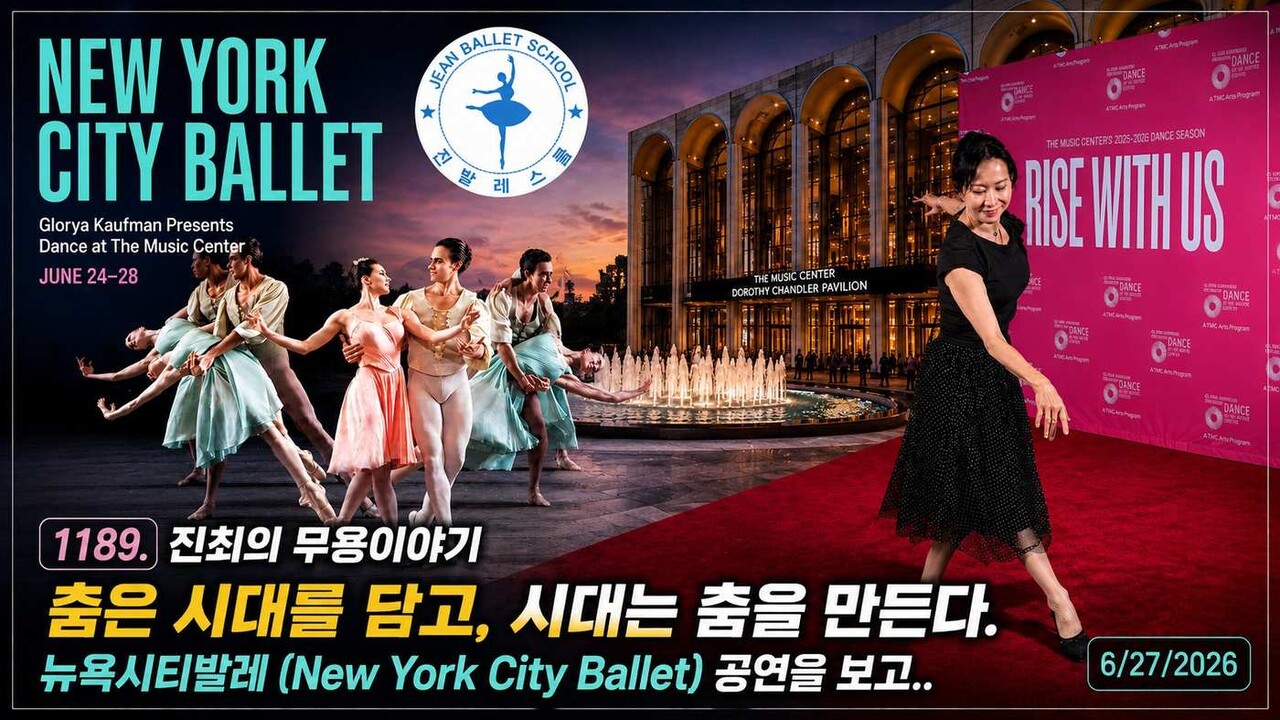
춤은 시대를 담고, 시대는 춤을 만든다– 뉴욕시티발레(New York City Ballet) 공연을 보고..
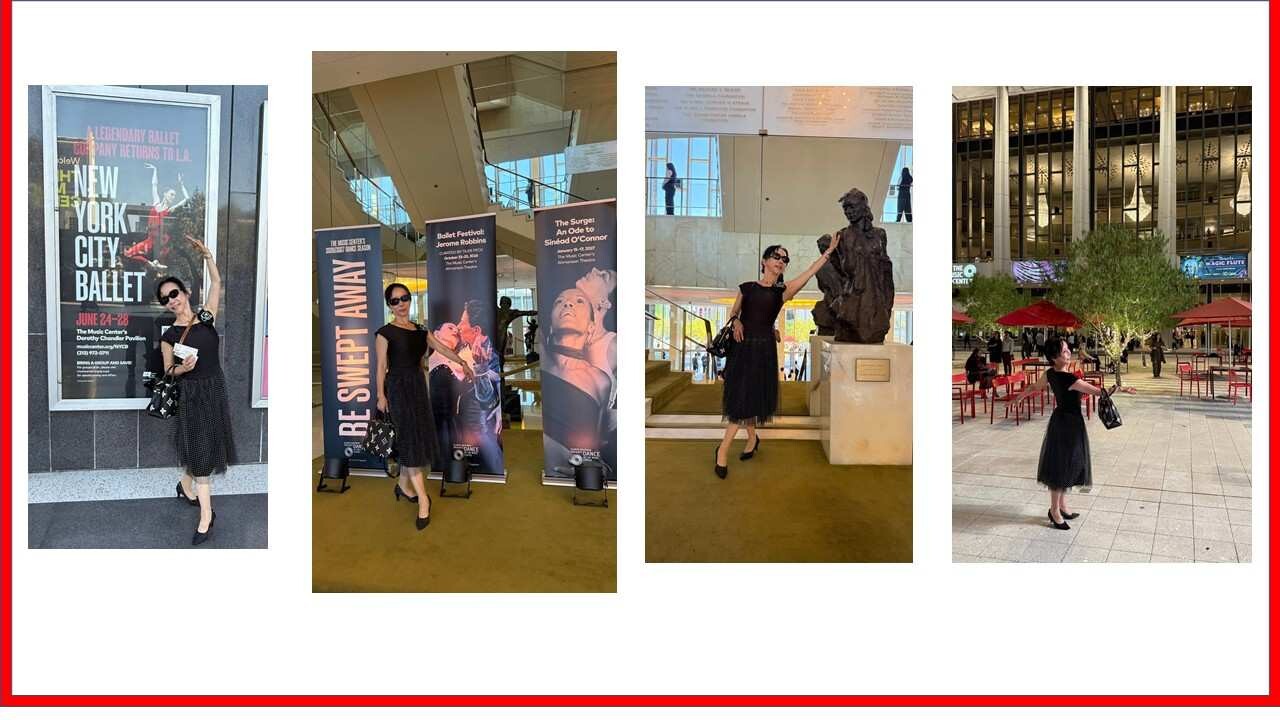
오랜만에 뮤직센터 공연장을 찾았다. 두 달 만에 찾은 공연장은 바쁘게 흘러가던 일상에 잠시 쉼표를 찍어 주었다. 이번 공연은 20년 만에 LA를 찾은 뉴욕시티발레(New York City Ballet)의 무대였다. 미국 발레의 아버지 조지 발란신(George Balanchine)이 창단한 이 발레단은 신고전주의 발레(Neo-Classical Ballet)를 대표하는 세계 정상급 발레단이다. 세계적인 명성은 오래전부터 알고 있었지만 생각해 보니 나 역시 뉴욕시티발레 공연을 직접 본 것은 이번이 처음이었다.
공연장에 들어서는 순간 예상과는 다른 풍경이 펼쳐졌다. 신고전주의 작품으로만 구성된 공연이라 다소 어렵게 느끼는 관객이 많을 것이라 생각했는데 객석은 빈자리 하나 없이 가득 찼다. 더욱 놀라웠던 것은 시니어보다 20~30대의 젊은 관객들이 훨씬 많았다는 점이었다. 모두가 멋진 드레스와 정장을 입고 공연장을 찾은 모습은 마치 레드카펫을 걷는 사람들 같았다. 공연을 관람하는 것 자체가 하나의 문화이고 축제가 되는 모습이었다. 그 모습을 바라보며 예술을 사랑하고 공감하는 사람들이 우리 주변에 이렇게 많다는 사실이 참 반가웠고, 우리의 문화예술의 미래는 밝다는 희망을 갖게 되었다.
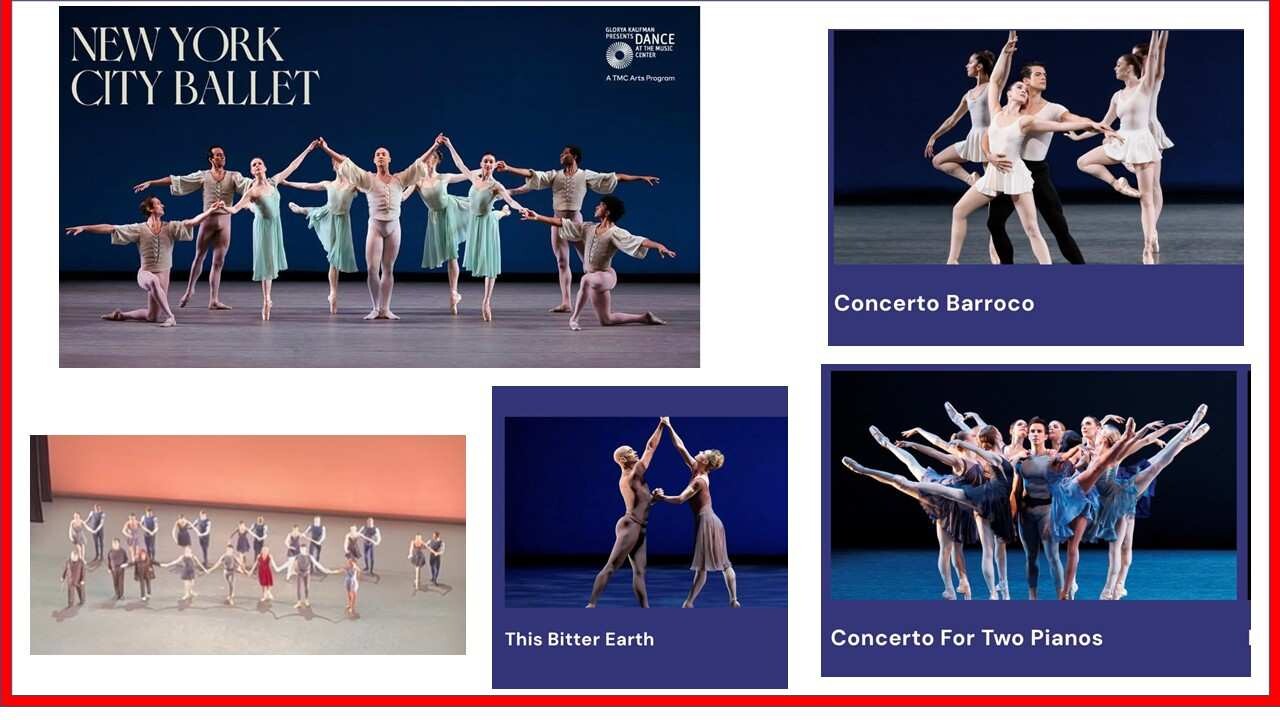
이번 공연은 〈바로크 협주곡(Concerto Barocco)〉, 〈알레그로 브릴란테(Allegro Brillante)〉, 〈이 쓰디쓴 세상(This Bitter Earth)〉, 〈두 대의 피아노를 위한 협주곡(Concerto for Two Pianos)〉이 이어졌다. 작품마다 색깔은 달랐지만 공연 전체를 관통하는 하나의 철학이 있었다. 화려한 배경도 없고 거대한 세트도 없었다. AI와 첨단 영상기술, 눈을 현혹시키는 조명도 없었다. 군더더기 없이 오직 춤으로만 승부를 거는 무대였다. 숨길 것도, 기대어 설 것도 없는 무대에서 무용수들의 실력은 더욱 선명하게 드러났다. 사람의 몸이 이렇게 아름다울 수 있을까 하는 감탄이 절로 나왔다. 무엇보다 놀라웠던 것은 주역만 뛰어난 것이 아니라 무대에 선 모든 무용수가 저마다 한 작품의 주인공처럼 빛나고 있었다는 사실이다. 그 순간 세계 최고의 발레단은 한 사람의 스타가 아니라 모든 단원의 실력이 만들어 내는 것임을 새삼 깨닫게 되었다.
무대를 바라보는 내내 이화여대에서 발레를 전공하던 학창시절이 떠올랐다. 처음 조지 발란신의 신고전주의 발레를 배울 때는 "이것도 발레인가?" 하는 의문이 먼저 들었다. 내가 알고 있던 발레는 《백조의 호수》나 《잠자는 숲속의 미녀》처럼 화려한 무대와 아름다운 이야기가 있는 예술이었다. 그러나 세월이 흐른 지금 뉴욕시티발레의 무대를 보며 그때 이해하지 못했던 발란신의 철학이 비로소 마음으로 다가왔다. 그는 고전을 버린 것이 아니라 발레의 본질을 되찾고자 했다. 이야기보다 춤을, 장식보다 움직임을, 무대보다 음악을 선택했고 음악을 몸으로 보여주는 새로운 발레 언어를 만들었다. 그제야 그의 춤이 왜 미국을 대표하는 발레가 되었는지 조금은 이해할 수 있었다.
공연이 끝난 뒤 객석을 가득 메운 관객들이 같은 감동을 안고 공연장을 나서는 모습을 바라보았다. 서로 이름도 모르고 나이도 다르지만 같은 공연을 보고 같은 순간 숨을 죽이며 같은 감동을 나누는 사람들. 예술은 사람과 사람의 마음을 이어주고 서로를 공감하게 하는 가장 아름다운 언어라는 생각이 들었다. 공연장 복도를 걸으며 나도 모르게 발끝을 세우고 팔을 펼쳤다. 마치 나 역시 무대 위의 발레리나가 된 것처럼 몸이 먼저 춤을 추고 있었다.
문득 이런 생각이 들었다. '아, 이것이 바로 예술이고, 바로 이것이 행복이구나.' AI와 테크놀로지가 세상을 이끌어가는 시대지만 사람의 마음을 움직이는 것은 결국 진실한 실력과 예술의 본질이다. 시대의 흐름을 이해하면 그 시대의 예술이 보인다. 그날 밤 뉴욕시티발레는 화려한 기술이 아니라 춤의 본질로 그 진리를 보여주었다. 춤은 시대를 담고, 시대는 춤을 만든다.
Dance Reflects Its Time, and Its Time Shapes Dance
After Watching the New York City Ballet
It had been a while since I last visited the Music Center. Returning after two months felt like placing a brief pause in the middle of a busy life. This time, the occasion was the long-awaited performance by the New York City Ballet, making its Los Angeles appearance for the first time in nearly twenty years. Founded by George Balanchine, widely regarded as the father of American ballet, the company is recognized as one of the world's finest representatives of neoclassical ballet. Although I had long admired its international reputation, I realized this was actually my first time seeing the company perform live.
As I entered the theater, I was greeted by a scene quite different from what I had expected. Since the program consisted entirely of neoclassical works, I assumed some audience members might find it intellectually demanding. Instead, every seat in the house was filled. Even more surprising was that the audience was made up largely of people in their twenties and thirties, outnumbering senior patrons. Elegantly dressed in evening gowns and tailored suits, they looked as if they were walking a red carpet. Attending the performance itself had become a celebration of culture. Watching this vibrant audience reminded me how many people genuinely appreciate and embrace the arts, giving me renewed hope for the future of our cultural community.
The evening featured Concerto Barocco, Allegro Brillante, This Bitter Earth, and Concerto for Two Pianos. Although each work possessed its own unique character, one artistic philosophy connected them all. There were no elaborate sets, no spectacular stage effects, no AI-generated visuals, and no dazzling technological displays. The stage belonged entirely to dance itself. With nothing to conceal or rely upon, the dancers' artistry became even more apparent. It was impossible not to marvel at the extraordinary beauty and expressive power of the human body. Most remarkable of all was that every dancer—not just the principal artists—shined like the leading performer of the evening. At that moment, I realized that a world-class ballet company is not built upon a single star but upon the excellence of every individual artist.
Throughout the performance, memories of my student years as a ballet major at Ewha Womans University came flooding back. When I was first introduced to George Balanchine's neoclassical style, my initial reaction was, "Is this really ballet?" To me, ballet had always meant magnificent productions like Swan Lake or The Sleeping Beauty—works filled with lavish scenery, beautiful costumes, and captivating stories. But as I watched the New York City Ballet perform, I finally understood the philosophy I had failed to grasp all those years ago. Balanchine did not abandon classical ballet; rather, he sought to rediscover its essence. He chose movement over narrative, musicality over decoration, and the dancer's body over theatrical spectacle. In doing so, he created an entirely new language of ballet—one that allows music itself to become visible through movement. Only then did I truly understand why his vision became the defining voice of American ballet.
When the curtain fell, I watched the audience leave the theater carrying the same sense of inspiration. Though strangers of different ages and backgrounds, we had shared the same moments of silence, the same breathless anticipation, and the same emotional journey. It reminded me that art is perhaps humanity's most beautiful language—a language that connects hearts beyond words.
As I walked through the theater lobby, I found myself unconsciously rising onto my toes and extending my arms, as though I, too, had become a ballerina upon the stage. My body had begun dancing before my mind even realized it. At that moment, a simple thought came to me:
"This is art. And this is happiness."
We live in an era increasingly driven by artificial intelligence and rapidly advancing technology. Yet what truly moves the human heart is still genuine artistry, authentic skill, and the timeless essence of art itself. When we understand the spirit of an era, we begin to understand the art it creates. That evening, the New York City Ballet demonstrated this profound truth—not through dazzling technology, but through the pure power of dance.
Dance reflects its time, and its time shapes dance.


